

Underwater Photography Tioman Dive Buddy Updated May 2026 7 min read Quick Answer
Tioman is an excellent underwater photography destination — clear water, diverse marine life from macro to wide-angle subjects, and accessible dive sites. Beginner-friendly cameras like Olympus TG-7 (~RM 1,500) or GoPro Hero 12 (~RM 1,800) work well. For serious work, Sony A6700 + housing (~RM 8,000-15,000). Best photography sites: Renggis (wide-angle), Labas Island (macro + wide), Tiger Reef (schools), Bahara Rock (drama and walls).
Key Takeaways
- Tioman has excellent visibility (10-20m typical) and varied subjects
- Beginner cameras: Olympus TG-7, GoPro Hero 12 — RM 1,500-2,000
- Advanced: Sony A6700 + housing, RM 8,000-15,000
- Best wide-angle sites: Tiger Reef, Bahara Rock, Magicienne Rock
- Best macro sites: Labas Island, Marine Park Centre, Renggis
- Best photography season: March-May, September-October (clearest water)
Why Tioman Is a Great Underwater Photography Destination
Tioman offers several advantages for photographers:
Variety: Wide-angle reef shots, drift photography, macro critters, schools, wrecks, sharks — all within an hour's boat ride.
Accessibility: Short boat rides mean more time photographing, less time transiting.
Year-round subjects: Photogenic marine life present in every season.
Water clarity: Visibility consistently 10-20m, occasionally 25m+.
Marine Park protection: Healthier reefs than less-protected areas.
Camera Equipment for Beginners
Olympus Tough TG-7 — Best Compact (~RM 1,500)
Specifications:
- Underwater rated to 15m without housing
- Macro mode capable of 1cm subject distance
- Built-in flash
- Excellent low-light performance
- Compact, fits in BCD pocket
Pros:
- Easy to use, point-and-shoot
- Excellent macro built in
- No additional housing cost
- Robust, can be dropped
Cons:
- Limited depth (15m without housing)
- Fixed lens, no upgrades
Best for: New photographers, macro work, easy-carry diving
GoPro Hero 12 — Best Video + Underwater (~RM 1,800)
Specifications:
- Underwater rated to 10m without housing
- 5K video, action camera quality
- Burst mode for stills
- Compact, wearable
Pros:
- Excellent video
- Action-camera versatility
- Built-in stabilization
Cons:
- Lower resolution stills than dedicated cameras
- Limited macro
- Limited depth without housing
Best for: Video-focused photographers, GoPro existing users, action shots
Sony A6700 + Housing — Best Quality (~RM 8,000-15,000)
Specifications:
- 26MP mirrorless camera
- Excellent low-light, ISO range
- Multiple lens options
- Compatible with quality housings (Sea & Sea, Ikelite, etc.)
Pros:
- Best image quality at this price
- Lens versatility
- Future-proof investment
- Quality housing options available
Cons:
- Expensive total system cost
- More complex setup
- Heavier to travel with
Best for: Serious photographers, professional aspirations, lens-changing diversity
Lens Selection
Wide-angle (8-16mm): For schools, reef landscapes, walls. Captures more of the scene with shorter water column distortion.
Macro (60-100mm): For small subjects (nudibranchs, shrimp, gobies). Requires diopter for very small subjects.
Fisheye (8mm): Most dramatic for tight spaces and wide reef scenes.
Most photographers carry 2 lenses minimum: one wide-angle, one macro.
Strobes and Lighting
Why you need strobes:
- Underwater light loses 50% of red within 10m
- Strobes restore color, especially red and orange
- Provide controlled lighting direction
Beginner strobe: Inon S-2000 (~RM 1,000)
- Compact, easy to use
- Reliable performance
Mid-range strobe: Sea & Sea YS-D3 (~RM 2,500)
- More power, faster recycling
- Better color rendition
Advanced: Inon Z-330 (~RM 3,500)
- Twin strobe setup capability
- Highest output
For first photos, a single strobe is usually sufficient.
Camera Settings Quick Reference
Wide-Angle Settings
- Aperture: f/8 to f/11 (depth of field for landscape)
- Shutter: 1/125 (with strobe) or 1/250 (without)
- ISO: 100-200 (sunlit) or 400 (low light)
- Strobe power: 1/4 to full depending on distance
Macro Settings
- Aperture: f/11 to f/22 (high depth of field for small subjects)
- Shutter: 1/125 to 1/250
- ISO: 100 to 200
- Strobe: Single side strobe at 45° angle to subject
Available Light (No Strobe)
- Aperture: f/8 to f/11
- Shutter: 1/250 to 1/500
- ISO: 200 to 800
- Best subjects: Schools backlit by sun, dramatic blue water shots
Best Tioman Dive Sites for Photography
1. Tiger Reef — Schools and Pelagics
Subject: Massive schools of jacks, barracuda, snappers Settings: Wide-angle, 1/200, f/8 Tips: Dive early morning for best ambient + clear water
2. Renggis Island — Sharks and Easy Subjects
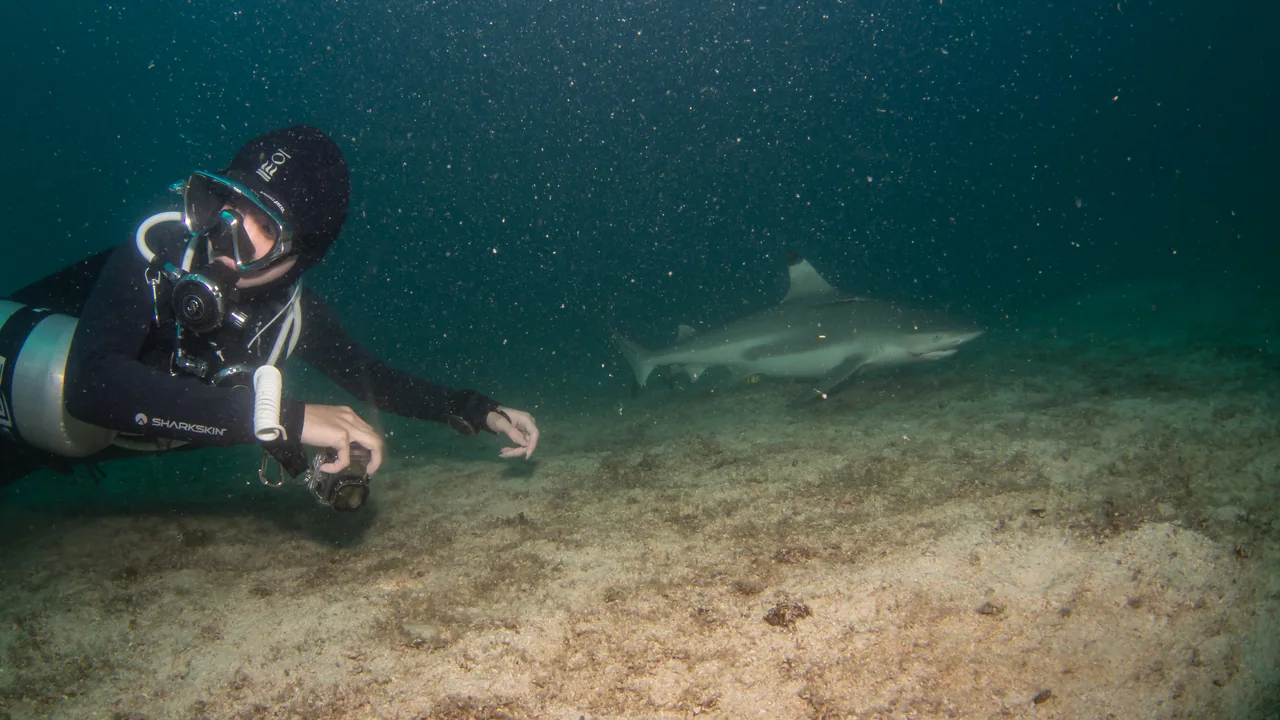
Subject: Blacktip reef sharks, turtles Settings: Wide-angle, available light if possible Tips: Shallow depths (8-15m) preserve color
3. Bahara Rock — Walls and Drama
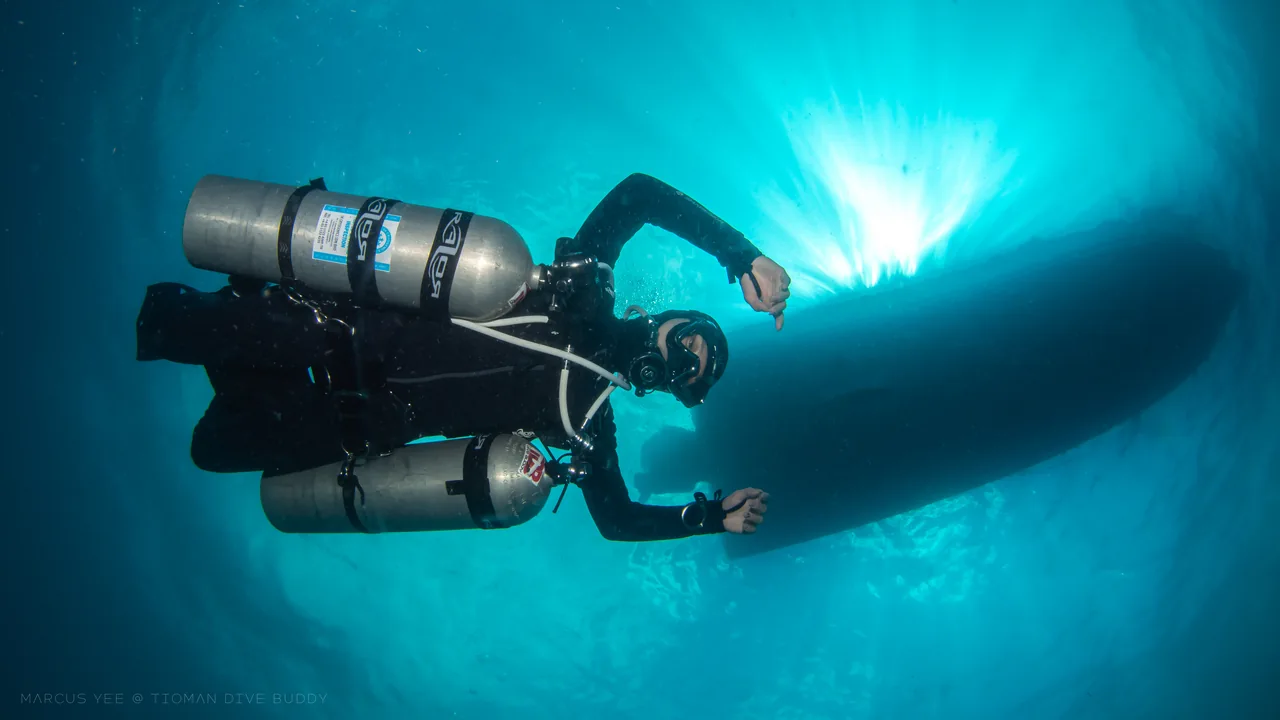
Subject: Vertical walls, pelagic visitors, sea fans Settings: Wide-angle, slight depth means strobes needed Tips: Shoot upward toward surface for dramatic blue water shots
4. Labas Island — Macro + Wide
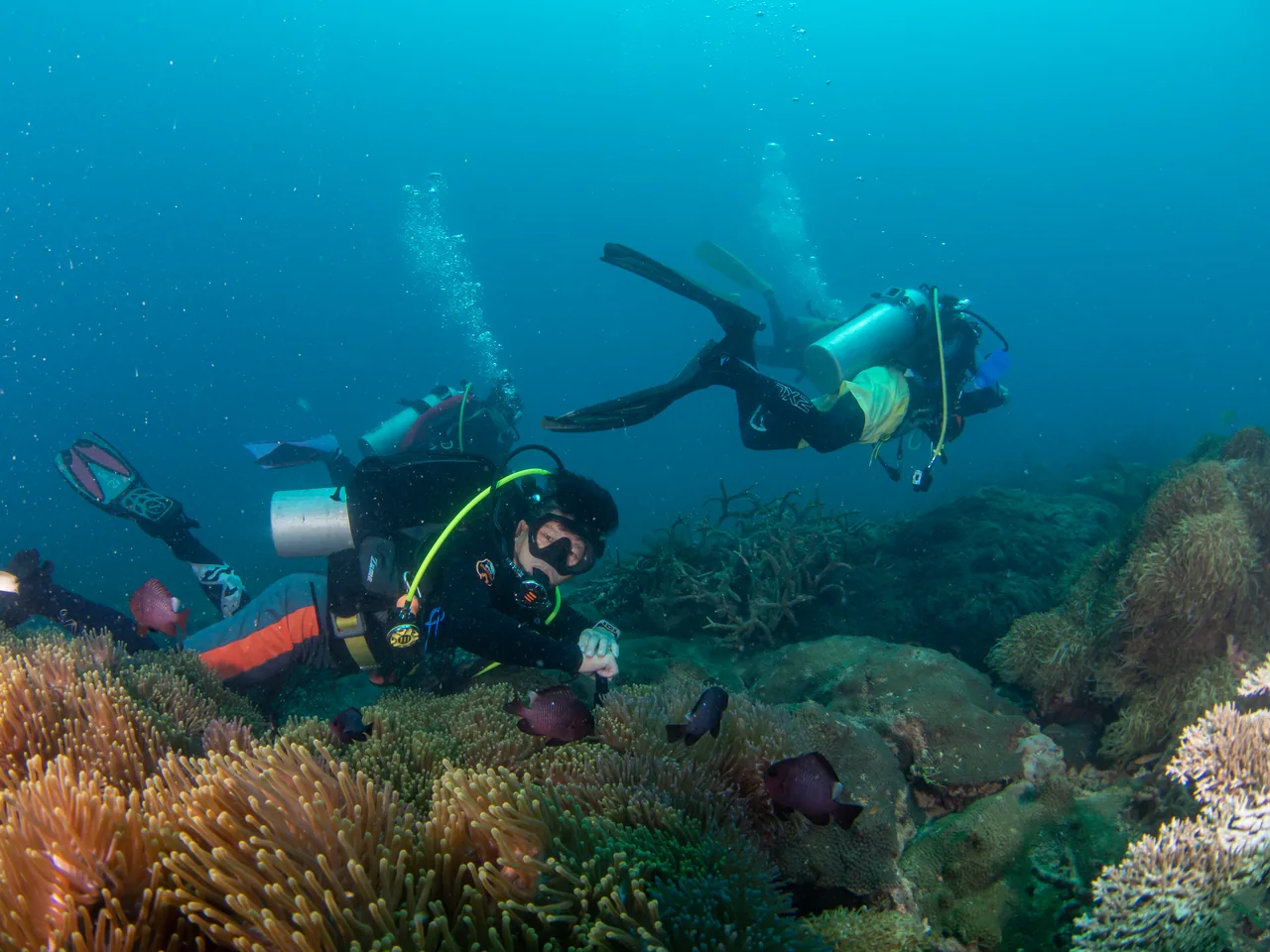
Subject: Coral gardens, nudibranchs, archway Settings: Macro for small subjects, wide for archway Tips: Bring both lenses if possible — site offers variety
5. Marine Park Centre Reef — Macro Practice
Subject: Small reef fish, nudibranchs, shrimp Settings: Macro, 1/200, f/11, single side strobe Tips: Easy depth (5-15m) means warm light penetrates
6. Soyak Wreck — Wreck Photography
Subject: Lionfish, scorpionfish, schooling sweetlips Settings: Mix of wide and macro depending on subject Tips: Include diver as scale reference
7. Magicienne Rock — Drama and Sea Fans
Subject: Sea fans, walls, occasional pelagics Settings: Wide-angle, dramatic light Tips: Backlit sea fans against blue water
8. Pirate Reef — Boulders and Big Fish
Subject: Hunting groupers, snappers, boulder formations Settings: Wide-angle, 1/250, f/8 Tips: Dawn dive for hunting predator action
Composition Tips
Rule of thirds: Place subjects at intersection points, not center.
Diagonal lines: Boat lines, reef edges, fish lines — all create visual dynamism.
Foreground interest: Include something near the lens to create depth.
Negative space: Empty water around a subject draws focus.
Backlit subjects: Position yourself so light comes through your subject.
Bubble streams: Use diver bubbles to add scale and motion.
Post-Processing
Lightroom or RAW Therapee:
- White balance correction (essential underwater)
- Exposure adjustment
- Color enhancement
- Crop and straighten
Underwater-specific: Some software (LightZone, AfterShot Pro) has dedicated underwater corrections.
Time investment: 5-10 minutes per photo for serious work.
Frequently Asked Questions
Do I need a professional camera for underwater photography?
No. Olympus TG-7 or GoPro Hero 12 can produce excellent results for under RM 2,000.How important is a strobe?
Very. Underwater light degrades quickly with depth. A strobe is the single most important upgrade for color reproduction.Can I learn underwater photography in Tioman?
Yes. The PADI Digital Underwater Photographer specialty is taught at TDB. Plus practical experience on local dive sites.When's the best time of year for Tioman photography?
April-May for spawning events and visibility. September-October for clear water and quieter sites.Do I need a separate dive computer if I'm using a camera?
Yes — dive computers are safety devices. Cameras aren't reliable for dive monitoring.================================================================================ END OF ENGLISH ARTICLES — 20 TOTAL ================================================================================
NOTES FOR PUBLISHING:
- Replace internal link references with actual tags
- Add JSON-LD schema: Article + FAQPage + BreadcrumbList per article
- Add hero image and inline images (alt text contains focus keyword)
- Set RankMath focus keyword + meta tags as listed at top of each article
- Publish in priority order suggested in tdb-blog-content-plan-20-articles.txt
================================================================================
About the Author
Tioman Dive Buddy — PADI 5★ IDC in Kampung Genting. We dive Tioman's reefs daily during season and have trained thousands of divers since 2010.